About Our
Business
– Bringing the healthy seafood
to the World : Our Exploration –
– Bringing the healthy seafood
to the World : Our Exploration –
To supply healthy seafood to the people of the world in a responsible way with respect for nature.
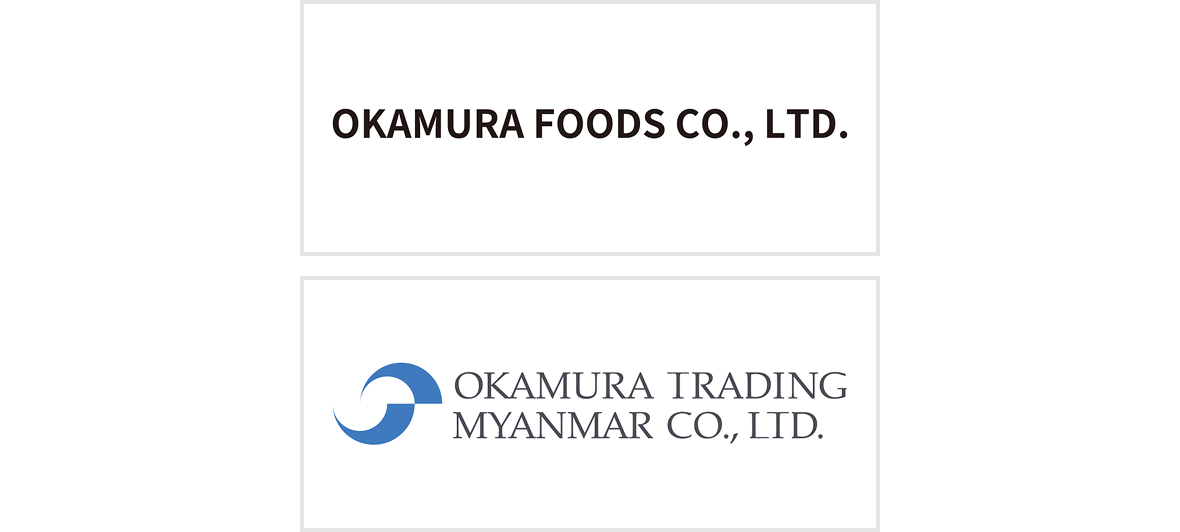
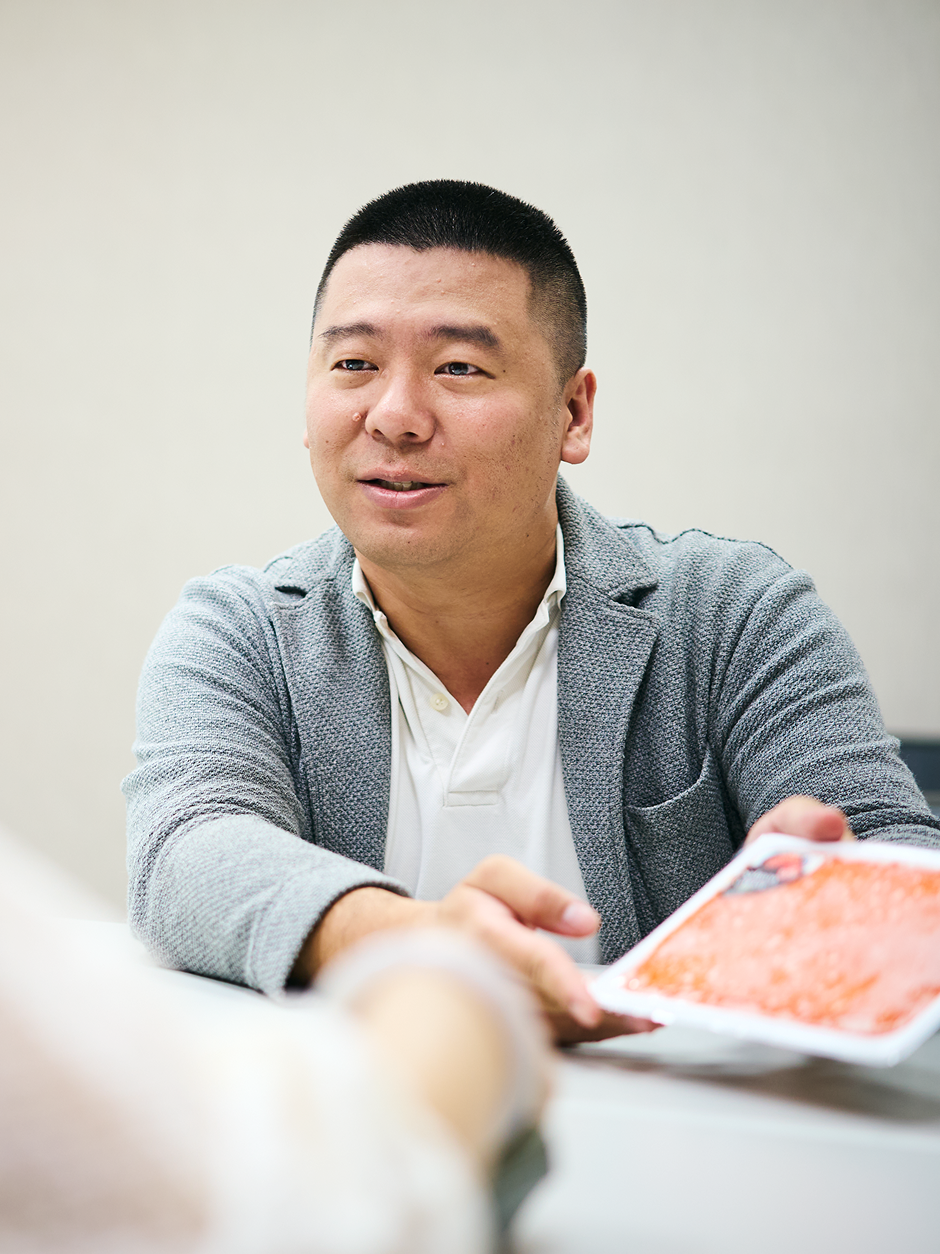
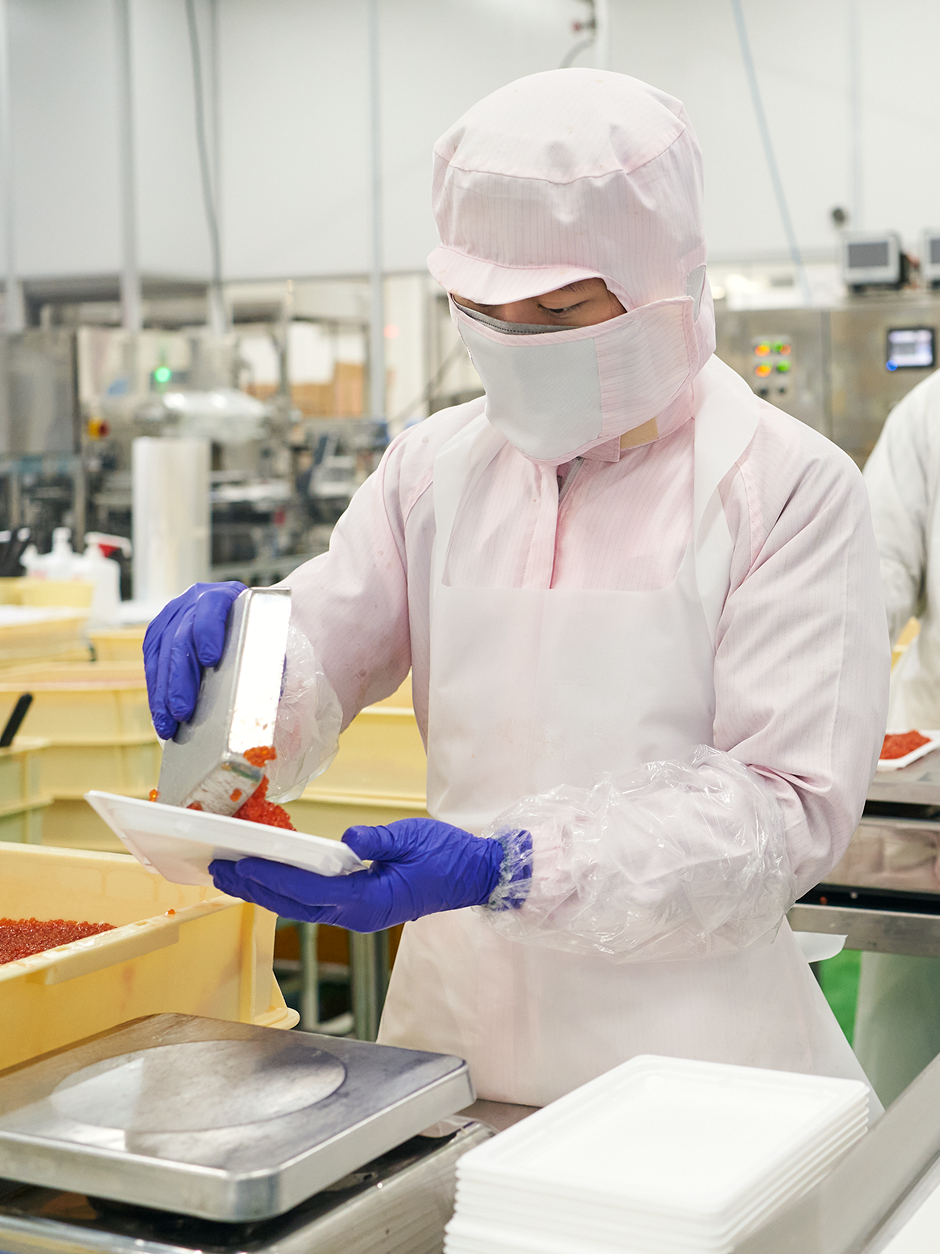
The Okamura Foods Group processes trout grown in aquaculture farms in Japan and Denmark, as well as mackerel, and fish roe (such as sujiko, ikura, and kazunoko) procured from around the world, at our own factories in Japan and Myanmar and partner factories in Vietnam. We then deliver these products to customers in Japan and overseas.
We will contribute the realization of a society where all people can lead healthy and prosperous lives by consistently providing safe and reliable food and supporting health and reassurance around the world. In addition, we will contribute to the realization of such a society by addressing various social issues surrounding food and, through sustainable business models, aim to develop the fisheries industry into a growth industry for the future.
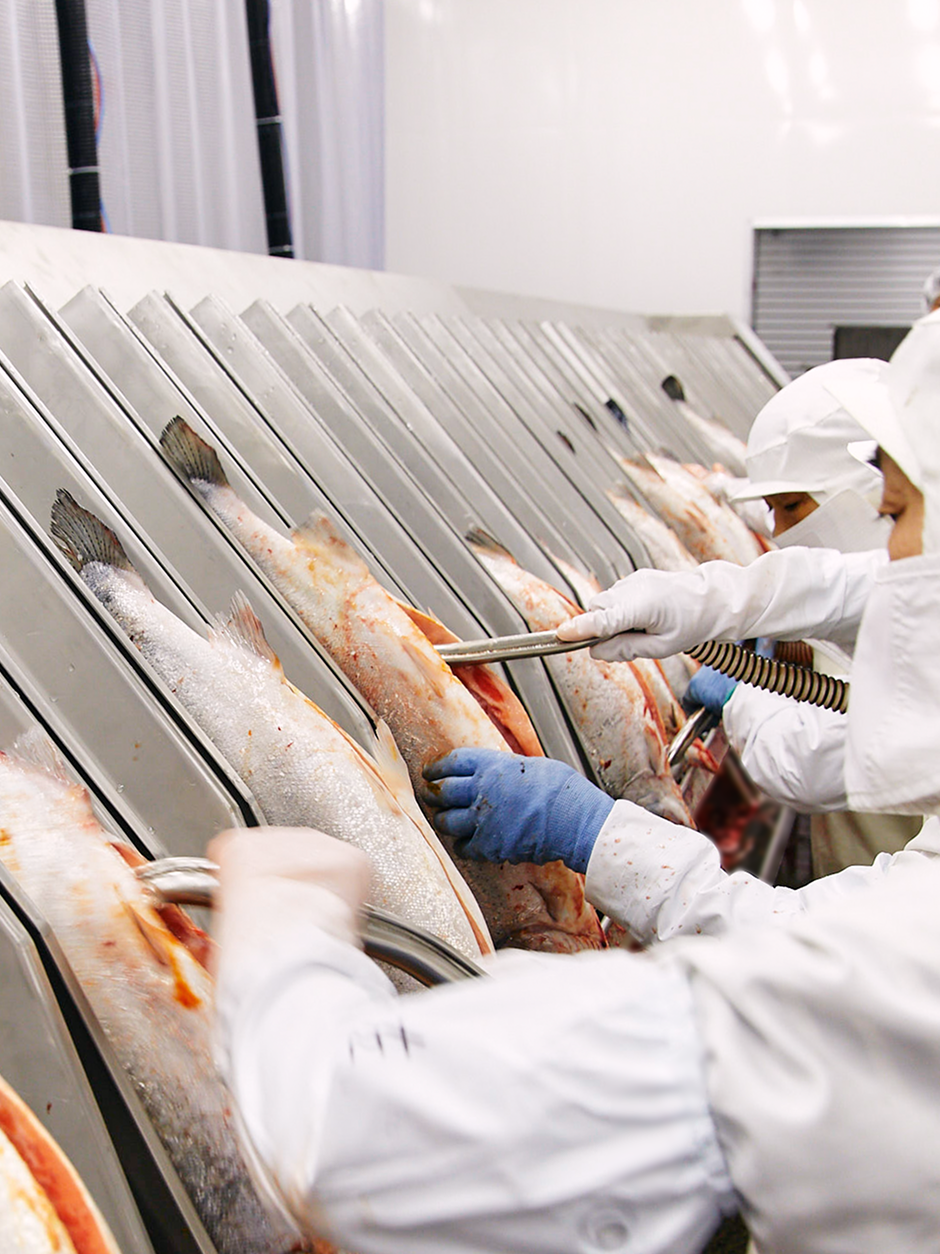
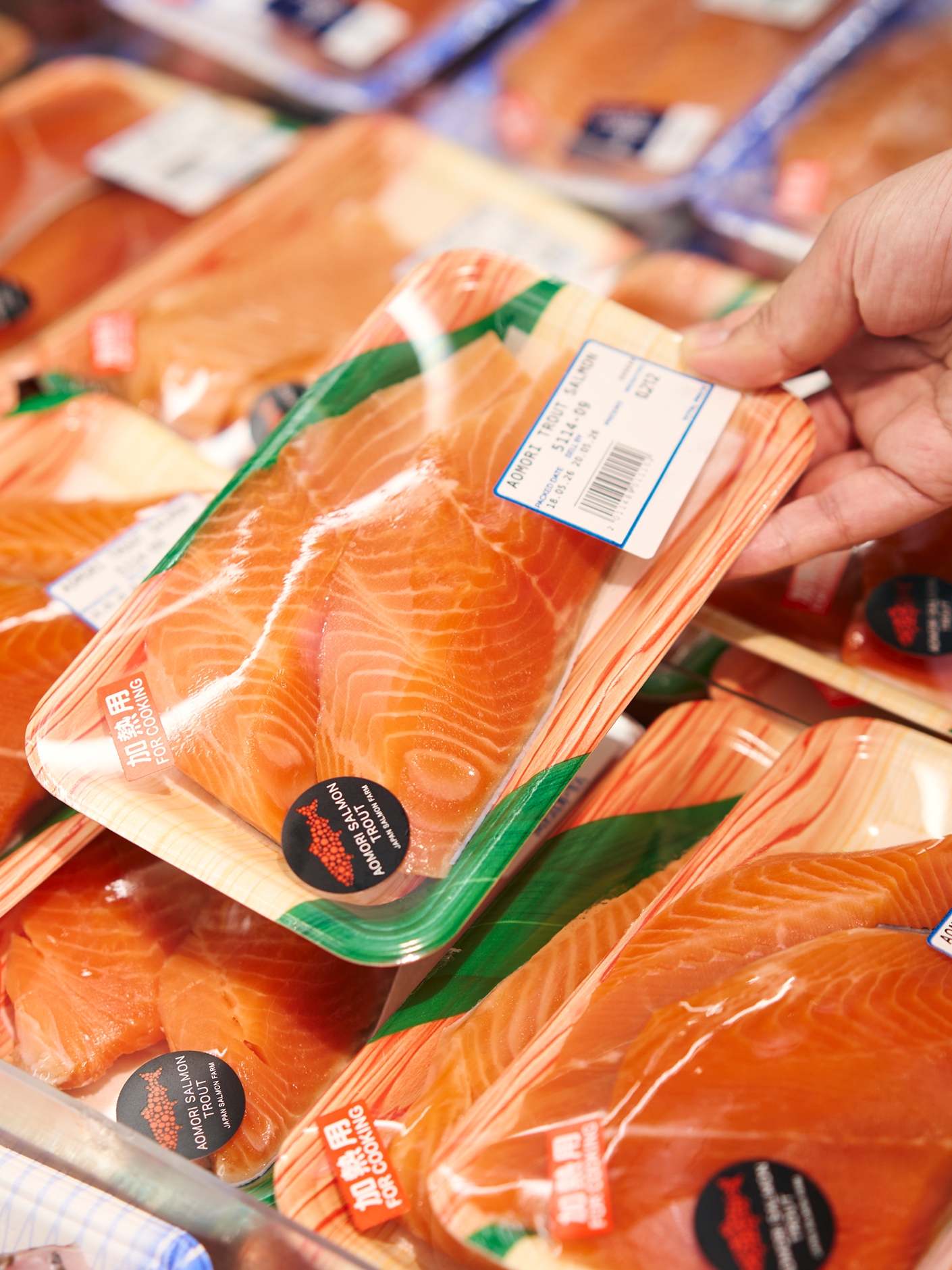
A Vertically Integrated Business Model
from Aquaculture to Sales
In order to realize our mission, we leverage our strength—a vertically integrated business model that seamlessly combines aquaculture, procurement, processing, and sales, working with local communities.
Through this model, we ensure strict quality control and full traceability, enabling us to consistently supply safe, high-value seafood to customers around the world.

(Only consolidated subsidiaries are listed.)
Two key Growth Engines Driving Our Expansion: Domestic Aquaculture and Overseas Wholesale Business
Two key Growth
Engines Driving Our
Expansion: Domestic
Aquaculture and
Overseas Wholesale
Business
We believe our domestic aquaculture business and overseas wholesale business are our two key growth engines.
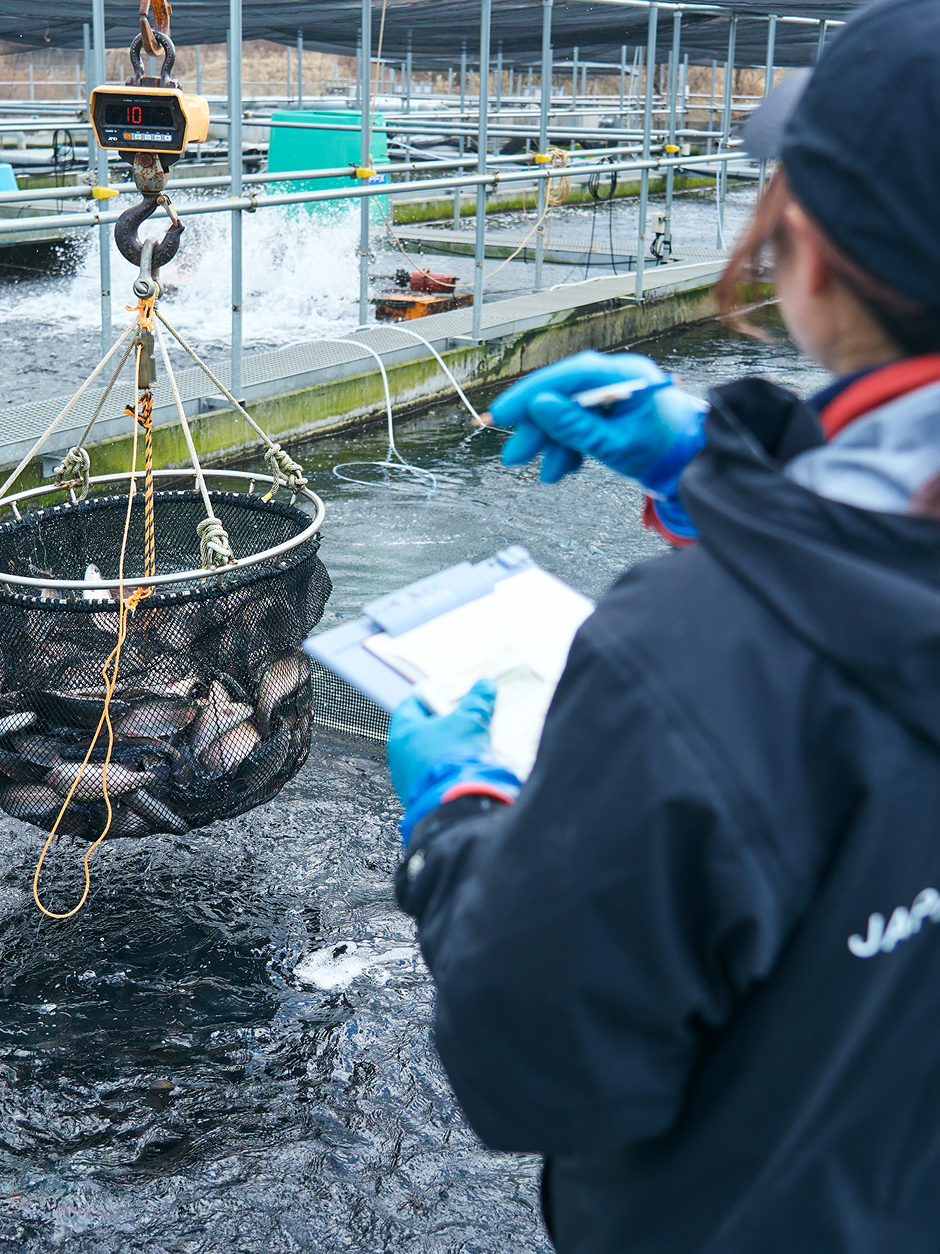
In our domestic aquaculture business, we are expanding production while overcoming the technical challenges to meet growing global demand for premium, Japan-branded trout for raw material.
In our overseas wholesale business, we are expanding our sales channels, primarily in Southeast Asia where demand for Japanese food and sushi is increasing. We are building a system that enables us to stably supply high-quality, and reasonably priced seafood to a wider range of customers.

Key Growth
Engine 1:
The demand for seafood is increasing globally every year, driven by population growth and more health-conscious consumers. There is a limit to the amount of wild-caught fish. Therefore, aquaculture is becoming increasingly important as it can provide a stable, sustainable supply.
In recent years, rising seawater temperatures have become a global issue, significantly affecting the habitats of wild fish. Salmon and trout have difficulty surviving in seawater temperatures above 20°C. However, stable production can be achieved in aquaculture by adjusting the period of sea-based farming in response to such environmental changes.
Specifically, by transferring the post smolt from freshwater to the ocean when seawater temperatures drop below 20°C, we can farm them in water that is most suitable for their growth.

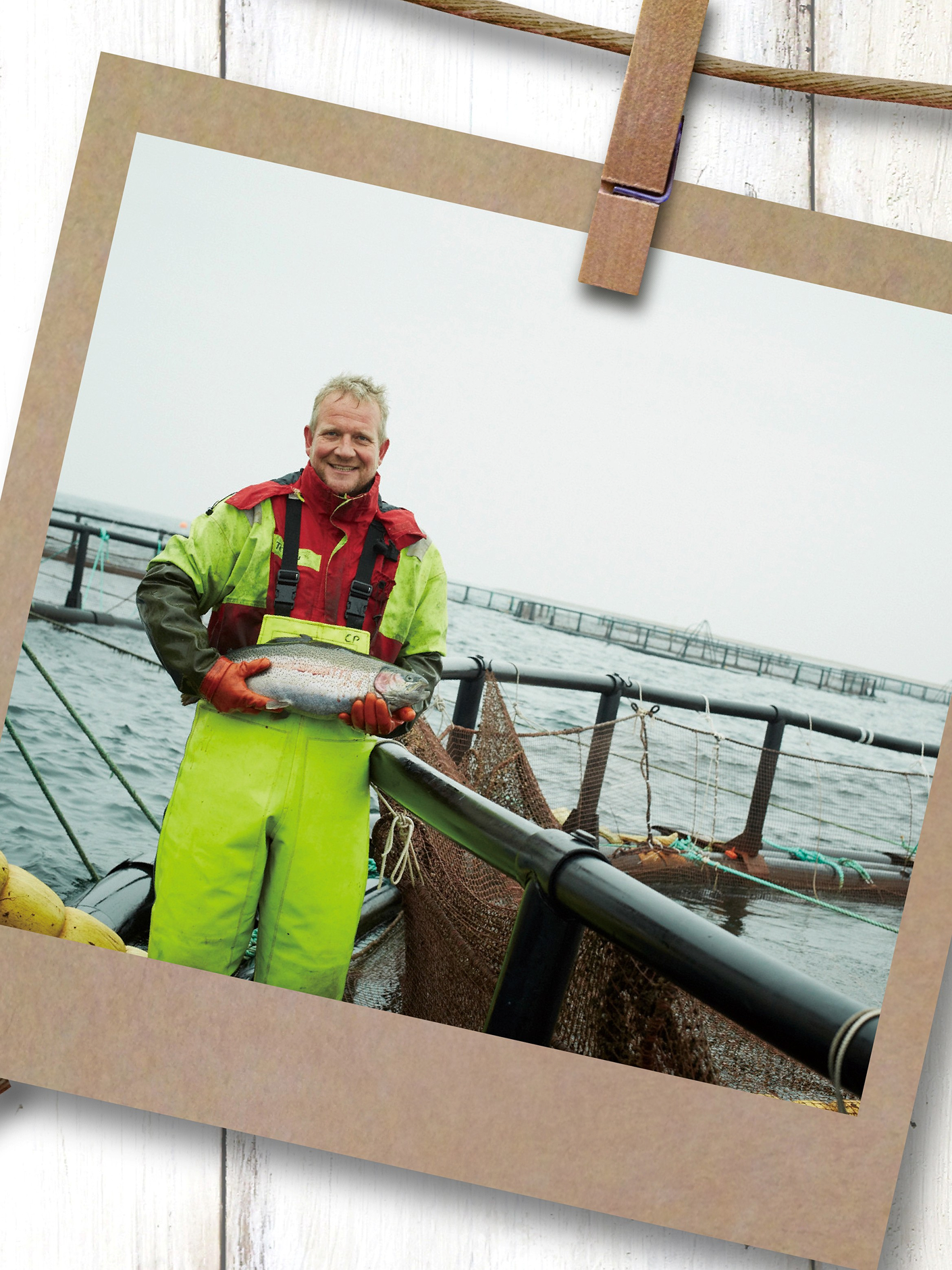
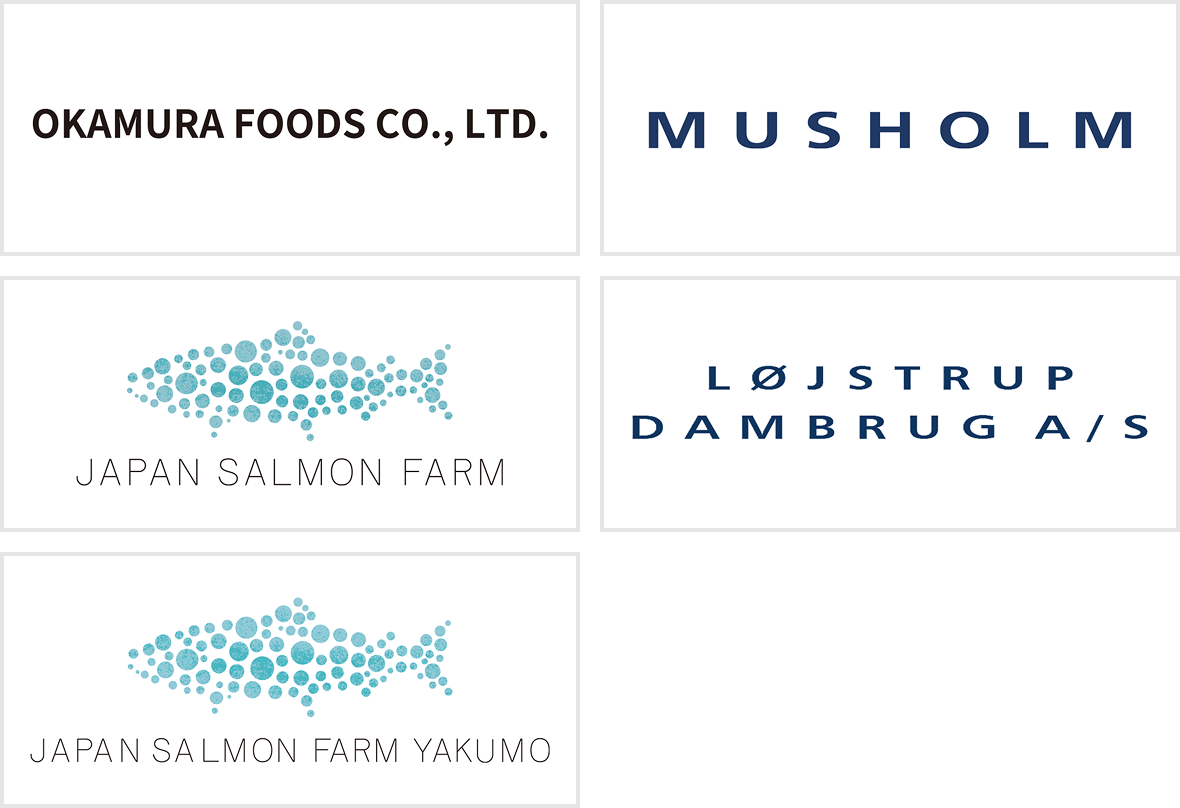
Our Group’s Aquaculture Business has two major hubs: Aomori, Japan, and Denmark in Northern Europe. In Japan, we farm raw trout, centered on Aomori Salmon®, in the cool waters of the Tsugaru Strait, located between Hokkaido and Honshu.
In Denmark, we farm fish roe materials such as sujiko and ikura, ensuring a stable supply of seafood resources. In addition, in Latvia—one of the Baltic states in Northern Europe—we are preparing to launch aquaculture operations as our third aquaculture base, following Japan and Denmark. By working closely with local communities, we aim to secure a stable supply of raw materials.
Through responsible aquaculture, we will continue to supply healthy seafood to people around the world.
Key Growth
Engine 2:

In recent years, the global popularity of Japanese food and increased tourism to Japan have driven the continued expansion of Japanese restaurants worldwide. Notably, growth in the number of establishments in Asian has been particularly remarkable.
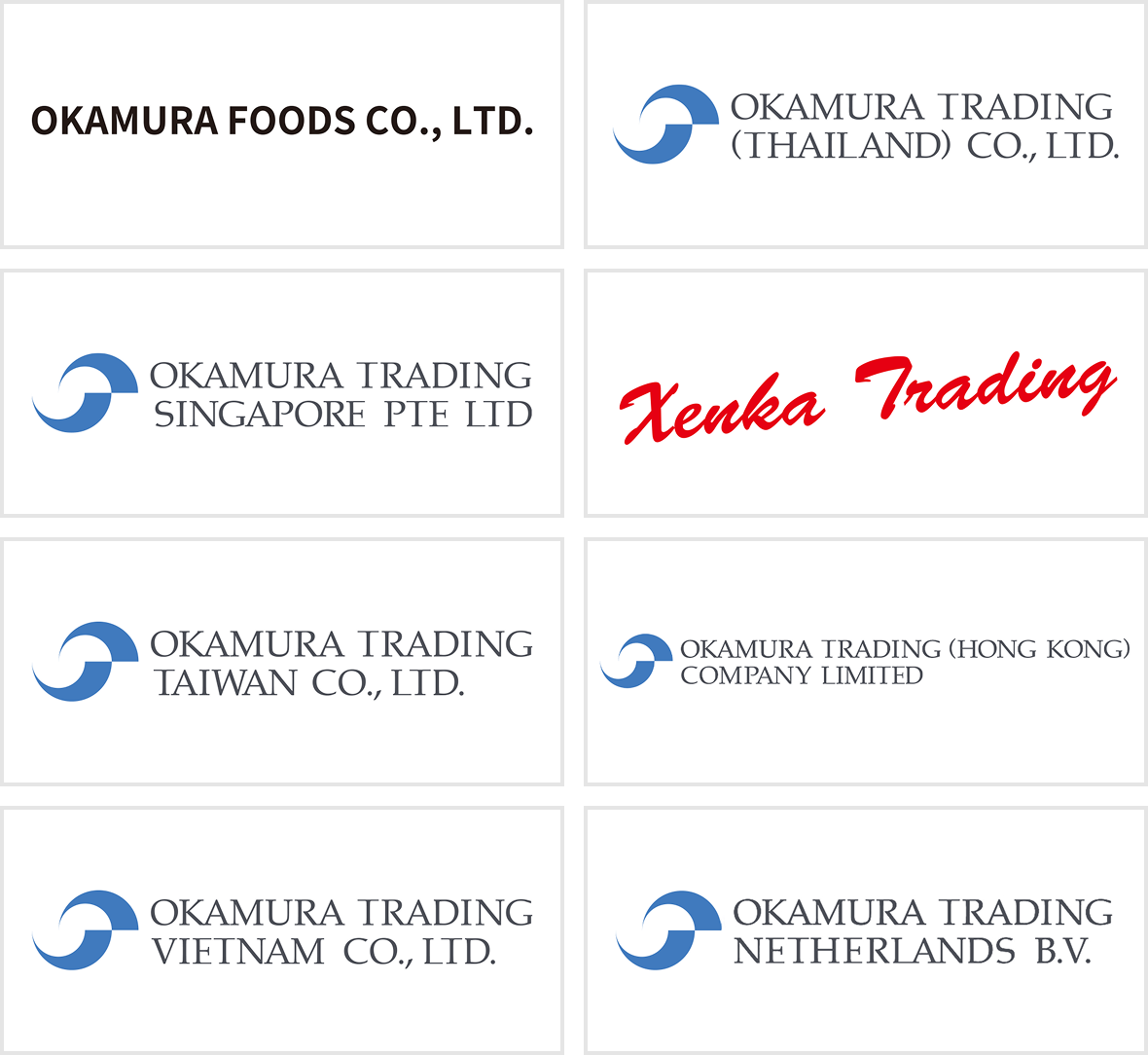
To meet this growing global demand, we have set up wholesale hubs not only in Asia, including Singapore, Malaysia, Taiwan, Thailand, Vietnam and Hong Kong, but also in the Netherlands in Europe. We are also working to develop an integrated value chain supported by a cold chain of the same quality as that in Japan.

As a foundation supporting this value chain, each of our facilities is equipped with our own warehouses capable of handling a wide range of temperature requirements. By storing products under optimal temperature conditions tailored to their specific requirements, we maintain quality control overseas at a level equivalent to that in Japan.
Furthermore, we have introduced our own small-scale processing facilities to enable us to meet the diverse needs of our customers flexibly. These facilities allow us to carry out small-lot customization, including cutting and seasoning, such as miso marination.
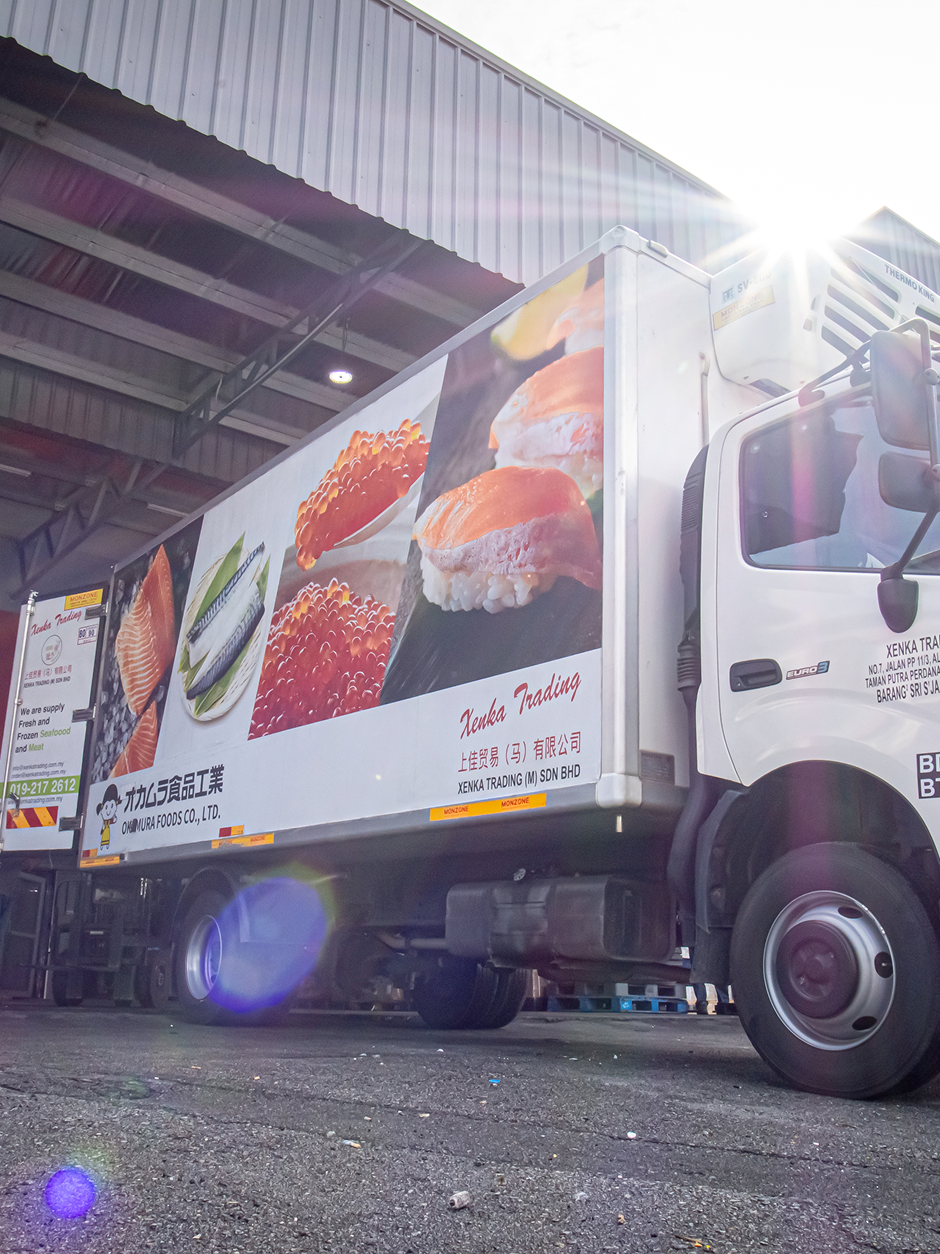
In terms of delivery, we have our own fleet of trucks and employ drivers to ensure that products are delivered promptly and at the correct temperature to customers' outlets.
Going forward, we are working to build a foundation to deliver the bounty of the sea to people around the world by sequentially expanding such infrastructure across each region.

We are actively committed to building a sustainable society for the future. We believe that creating value by addressing social challenges is the driving force behind corporate innovation and leads to further growth.
In addition to responding to climate change, we have identified a wide range of key issues (materialities), including contributing to food and health, supporting local communities, strengthening governance, and creating an environment in which diverse talent can thrive with confidence.
Through these initiatives, we will steadily fulfill our responsibilities as a corporate entity and promote sustainable business operations.
And we will continue to pursue our mission:
“To supply healthy seafood to the people of the world in a responsible way with respect for nature.”
To achieve this mission for generations to come, we will continue to explore —adapting to environmental changes, protecting natural resources, and growing together with society.